
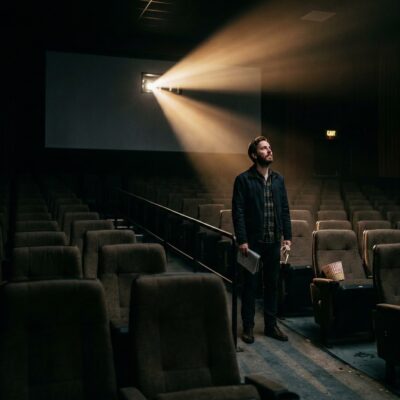
Some films entertain us for two hours and disappear by the next weekend. Others leave behind moments that quietly follow us for years. The idea of memorable movie scenes psychology becomes fascinating when you realize that audiences rarely remember entire plots perfectly, yet they vividly remember a hallway fight, a final glance, or a line delivered in silence.
That emotional residue is not accidental.
Great filmmakers understand that cinema is less about information and more about emotional imprinting. A truly unforgettable scene does not simply tell us what happened. It makes us feel something difficult to explain afterward.
Years later, people may forget release dates, box office numbers, or even supporting characters. But they still remember the spinning hallway in Inception, the final train platform scene in Dilwale Dulhania Le Jayenge, or the silent ending of La La Land.
The scenes survive because emotions survive.
Why Memorable Movie Scenes Psychology Begins With Emotion
Human memory is emotionally selective. We remember moments that interrupt emotional normalcy. Fear, longing, grief, awe, relief, and hope create stronger mental associations than information alone.
Cinema uses that psychological truth masterfully.
A powerful scene often arrives at an emotional crossroads. Something changes internally for the character — and subconsciously for the audience too.
Think about the docking sequence in Interstellar. Technically, it is an action sequence. Yet what people remember most is not the spectacle. It is the desperation underneath it. The scene feels like time itself is collapsing emotionally.
That is an important distinction modern filmmaking sometimes forgets: audiences connect deeper to emotional stakes than visual scale.
Today, streaming platforms produce endless content. Yet only a small percentage of scenes become culturally unforgettable. The difference usually comes down to emotional sincerity.
Why Memorable Movie Scenes Psychology Connects With Human Emotion
People often misremember exact movie quotes. But they remember how scenes felt.
That explains why some nearly silent scenes become iconic. A lingering stare. A paused breath. A character walking away alone after victory.
In real life, emotional memory works similarly. Most people cannot perfectly recall ordinary conversations from five years ago. But they remember how certain moments emotionally altered them.
Cinema mirrors human psychology more than audiences realize.
How Visual Storytelling Creates Cinematic Memory
Great directors rarely rely only on dialogue. They build emotional memory visually.
Lighting, framing, pacing, silence, and movement all shape how a scene settles into the audience’s mind.
Christopher Nolan frequently uses time distortion not merely for complexity, but for emotional weight. Meanwhile, Denis Villeneuve often creates emotional immersion through stillness and scale.
Neither approach works without emotional intention beneath the visuals.
Color and Atmosphere Quietly Shape Emotional Recall
One reason audiences emotionally remember Blade Runner 2049 is its atmosphere. The orange haze, empty landscapes, and lonely architecture create emotional texture before characters even speak.
Visual mood becomes emotional memory.
That is why some films feel impossible to forget even when the storyline itself is simple.
In many ways, cinema behaves like music. Audiences may not consciously analyze structure, but emotionally they feel rhythm, tone, and emotional tension.
Silence Often Becomes More Powerful Than Dialogue
Modern entertainment frequently fears silence. Everything must move fast, explain itself instantly, or generate constant stimulation.
Yet unforgettable scenes often slow down.
The ending sequence in The Pursuit of Happiness works because the emotional release arrives quietly. No dramatic speech is needed. The audience already understands the emotional journey.
Silence allows viewers to emotionally participate instead of simply observe.
That participation creates deeper attachment.
Memorable Movie Scenes Psychology Reflects Real Human Experience
The most powerful scenes usually mirror emotional truths audiences already recognize internally.
That is why viewers from completely different countries can emotionally connect to the same moment.
A parent sacrificing comfort for a child. A person confronting loneliness. Someone choosing hope despite fear. These themes feel universally human.
Audiences Attach Personal Meaning to Film Moments
Interestingly, audiences rarely remember scenes exactly as directors intended them.
Instead, people project their own experiences into cinematic moments.
Someone recovering from heartbreak may emotionally connect to Eternal Sunshine of the Spotless Mind differently than someone experiencing young love for the first time.
That emotional personalization is what transforms scenes into lifelong memories.
A movie scene stops becoming “content” and starts becoming emotional reference material for people’s own lives.
Why Modern Audiences Crave Emotional Authenticity
Social media changed entertainment consumption dramatically. Audiences now experience constant stimulation, endless scrolling, and rapid emotional turnover.
Ironically, that has made emotionally honest storytelling even more valuable.
Viewers are increasingly drawn toward scenes that feel emotionally grounded rather than artificially manufactured.
That explains why quieter moments from films often dominate online conversations long after release. Not because they are louder, but because they feel emotionally true.
A subtle observation many filmmakers understand today: audiences forgive imperfect visuals faster than emotionally hollow storytelling.
Spectacle Alone Rarely Creates Lasting Impact
Big action scenes may trend temporarily online. But emotional scenes become cultural memory.
People revisit the final conversation in Good Will Hunting because vulnerability feels timeless. They revisit emotionally layered endings because those scenes speak to unresolved emotions inside themselves.
Cinema becomes memorable when it helps audiences emotionally recognize themselves.
That recognition is deeply human.
Memorable Movie Scenes Psychology and the Power of Shared Culture
Certain scenes become collective emotional experiences.
People who watched Avengers: Endgame in packed theaters still talk about audience reactions years later. The memory is not only about the scene itself. It is about communal emotional energy.
Cinema uniquely creates synchronized emotional experiences among strangers.
That cultural power still matters in a fragmented digital world.
Films Become Emotional Time Capsules
Sometimes audiences remember where they were emotionally when they first watched a scene.
A college student watching a coming-of-age film during uncertainty. A parent understanding a movie differently after having children. A lonely person finding unexpected comfort in a fictional character.
Movies quietly attach themselves to life phases.
That may be the deepest reason unforgettable scenes survive across generations.
They stop belonging only to the film.
They begin belonging to people.
Why Great Filmmakers Understand Emotional Timing
One overlooked aspect of cinematic psychology is timing.
Great scenes rarely happen randomly. Directors carefully build emotional anticipation before release.
A powerful moment often works because of restraint beforehand.
Steven Spielberg mastered this for decades. Fear arrives slowly in Jaws. Wonder builds gradually in E.T. the Extra-Terrestrial.
The audience emotionally earns the payoff.
That patience feels increasingly rare today, which may explain why older scenes sometimes feel more emotionally immersive than modern fast-paced editing.
Emotional Build-Up Matters More Than Shock Value
Temporary surprise creates reaction.
Emotional build-up creates memory.
There is a difference between a scene audiences talk about for 24 hours online and a scene audiences carry emotionally for 20 years.
Great filmmakers understand that distinction deeply.
Conclusion
The reason certain movie scenes stay with us long after the credits end has very little to do with spectacle alone. The real answer lies in emotional truth, visual memory, psychological timing, and human connection.
The best scenes do not merely entertain audiences.
They emotionally mark them.
That is why cinema remains culturally powerful even in an era dominated by short-form content and endless scrolling. People still crave experiences that feel emotionally real.
And perhaps that is the quiet beauty of film itself.
Long after plots fade, emotions remain.