
Most brands try to capture attention online. The Duolingo marketing strategy did something more difficult: it made people want to participate voluntarily. That difference matters.
In an internet culture filled with polished corporate messaging and algorithmic sameness, Duolingo somehow turned a green owl into one of the most recognizable personalities online. Not just a mascot a personality. People quote it, meme it, wait for its TikToks, and occasionally fear it in a strangely affectionate way.
What makes this interesting is that the company rarely feels like it is “doing marketing” in the traditional sense. It feels like internet behavior. And that may be the smartest thing they ever understood.
Why the Duolingo Marketing Strategy Feels Human
The internet has changed how people respond to brands. Audiences no longer reward perfection as much as relatability. Highly polished advertising often feels emotionally distant now.
The Duolingo marketing strategy works because it behaves less like a corporation and more like a culturally aware creator account.
That distinction is subtle, but powerful.
Instead of constantly explaining product features, Duolingo built emotional familiarity. The owl appears chaotic, self-aware, dramatic, and intentionally unserious. The content understands meme timing, internet humour, and platform behavior in ways many companies still struggle to imitate.
What audiences respond to is not only humor. It is recognition.
People can tell when a brand understands the rhythm of the internet rather than interrupting it.
The Duolingo Marketing Strategy Turned a Mascot Into a Character
Most brand mascots exist as visual identifiers. Duo became a narrative device.
How the Duolingo Marketing Strategy Built Internet Lore
On platforms like TikTok and Instagram, the owl stopped behaving like a corporate symbol and started acting like an unpredictable online personality.
One day it was “threatening” users to finish lessons. Another day it was reacting to celebrity drama or participating in trending sounds.
That consistency created something many companies fail to build: internet lore.
The audience began understanding the character emotionally. People expected certain behaviors from Duo the same way audiences expect personality traits from fictional sitcom characters.
That emotional continuity is incredibly rare in brand marketing.
Audiences Reward Emotional Consistency
A surprising number of modern brands confuse virality with identity.
Duolingo avoided that trap because its humor always felt connected to the same personality. Even when trends changed, the emotional tone remained recognizable.
That consistency builds trust subconsciously.
It is similar to why creators like MrBeast or brands like Netflix maintain strong audience engagement. The audience knows what emotional experience they are walking into.
The Duolingo Marketing Strategy Understands Internet Culture Better Than Most Brands
A lot of companies still approach social media like digital billboards. Duolingo approached it like participation.
The difference changes everything.
The Internet Rewards Participation, Not Perfection
Modern audiences especially younger users can instantly detect when content feels overly approved, overly safe, or excessively optimized.
Duolingo embraced awkwardness, absurd humor, and self-awareness. That made the brand feel less intimidating and more socially native.
Even their push notifications became culturally recognizable.
Instead of sterile reminders, users received messages that felt playful, dramatic, or emotionally manipulative in a joking way. Strangely enough, people screenshotted them and shared them voluntarily.
That is one of the clearest signs of effective modern branding: when users distribute your marketing themselves.
Humor Became a Retention Tool
The genius of the Duolingo marketing strategy is that entertainment supports retention instead of distracting from it.
Many apps gain downloads but lose emotional relevance quickly. Duolingo stayed culturally visible between usage sessions.
That matters because attention online is fragmented now.
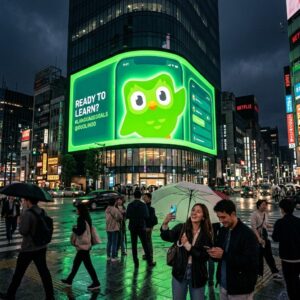
People may not practice Spanish every day, but they still encounter Duo constantly through memes, TikToks, reposts, or internet jokes. The brand stays psychologically present even outside the product experience.
Why the Duolingo Marketing Strategy Works Psychologically
Underneath the memes, there is a surprisingly intelligent understanding of human behavior.
The app combines:
- streak psychology
- gamification
- emotional reward systems
- social accountability
- humor-driven engagement
But importantly, it rarely feels clinical.
The App Makes Progress Feel Emotional
Many educational platforms focus heavily on efficiency. Duolingo focuses on momentum.
That is an important emotional distinction.
Small animations, encouraging sounds, streak reminders, and playful language create a sense of emotional progress rather than purely academic progress.
People return because the experience feels rewarding psychologically, not just educationally.
In a world where attention is constantly exhausted, emotional design often matters more than technical complexity.
The Duolingo Marketing Strategy Benefited From Cultural Timing
Part of Duolingo’s success came from understanding the emotional climate of the internet.
Audiences became increasingly tired of:
- hyper-corporate branding
- sterile startup language
- productivity obsession
- emotionally empty advertising
Meanwhile, internet culture moved toward authenticity, humor, and emotional relatability.
The pandemic accelerated this shift. People spent more time online, became more fluent in internet humor, and developed stronger emotional relationships with creators and digital personalities.
Duolingo entered that moment perfectly.
Its content felt less like a company selling education and more like a brand participating in collective online behavior.
That emotional timing is difficult to manufacture artificially.
What Brands Can Learn From the Duolingo Marketing Strategy
Many companies copied Duolingo’s humor afterward. Few replicated the deeper reason it worked.
Personality Is More Important Than Virality
One viral post means very little without identity underneath it.
The real lesson from the Duolingo marketing strategy is not “be funny.” It is:
build a recognizable emotional experience.
Audiences remember emotional consistency far longer than isolated campaigns.
Modern Marketing Feels Closer to Storytelling
Today, brands compete not only on products but on emotional presence.
People follow accounts because they want:
- entertainment
- recognition
- personality
- perspective
- emotional familiarity
That is why creator culture changed branding permanently.
Companies are no longer only selling products. Increasingly, they are building ongoing audience relationships that behave almost like entertainment ecosystems.
Duolingo understood that earlier than most.
Conclusion
The reason Duolingo became such a powerful cultural brand is not simply because it mastered social media trends.
It understood something deeper about modern attention.
People do not connect with brands that speak perfectly. They connect with brands that feel emotionally recognizable.
The Duolingo marketing strategy succeeded because it blended humor, behavioral psychology, internet fluency, and emotional consistency into something audiences genuinely enjoyed interacting with. And maybe that is the bigger shift happening online right now.
The brands people remember no longer feel like advertisements. They feel like personalities participating in culture alongside everyone else.