
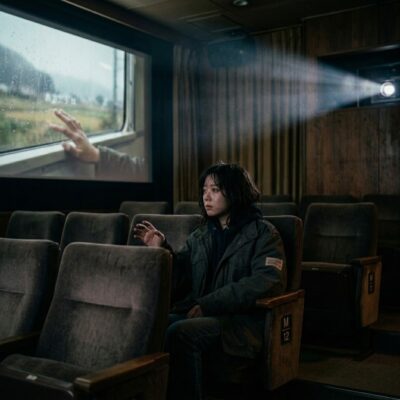
Modern entertainment moves fast. Every platform competes for attention through speed, intensity, noise, and constant stimulation. That is partly why slow emotionally quiet films feel surprisingly powerful again. They offer something modern audiences rarely experience anymore: emotional stillness.
You can feel this shift almost immediately when watching recent audience favorites like Past Lives, Aftersun, or Drive My Car. These films do not rush toward spectacle. Instead, they allow silence, pauses, and unresolved emotions to breathe naturally.
And strangely, that restraint feels more emotionally intimate than many louder films ever could.
Perhaps audiences are not becoming less interested in emotion. Perhaps they are simply exhausted by exaggerated emotion.
Why Slow Emotionally Quiet Films Feel More Honest Today
For years, mainstream storytelling rewarded intensity. Bigger twists. Faster pacing. Constant dialogue. Endless emotional signaling.
Yet real human emotion rarely works that way.
Most meaningful experiences arrive quietly. Grief enters through silence. Loneliness appears in routines. Love often reveals itself through hesitation rather than declarations. The strongest emotional memories in life usually happen in ordinary moments people almost miss while living them.
That is exactly why slow emotionally quiet films resonate so deeply now. They mirror emotional reality instead of performing emotion for entertainment.
The Audience No Longer Wants to Be Manipulated Every Minute
Modern viewers have become highly aware of emotional formulas.
People recognize when music is trying too hard to force sadness. They notice predictable dramatic structures. Years of algorithm-driven content consumption have made audiences more emotionally literate in strange ways.
Quiet cinema creates space instead of instruction.
A scene where a character silently looks out of a train window can sometimes communicate more than pages of dialogue because viewers are allowed to participate emotionally rather than simply consume emotional cues.
That participation creates intimacy.
Slow Emotionally Quiet Films Reflect the Emotional Exhaustion of Digital Culture
There is another reason these films feel culturally important right now.
The internet rarely allows silence anymore.
Every platform encourages reaction, performance, commentary, and visibility. Attention has become a constant social currency. In that environment, emotionally restrained films almost feel rebellious.
Watching a quiet film today can feel strangely therapeutic because nothing is aggressively demanding your emotional response every few seconds.
Silence Feels Rare in Modern Media
Think about how unusual silence has become.
Streaming platforms autoplay instantly. Social feeds refresh endlessly. Even conversations online often feel optimized for performance rather than connection.
Then a film like Perfect Days arrives and spends several uninterrupted minutes observing ordinary routines, quiet streets, and subtle expressions.
Nothing “big” happens.
Yet audiences often leave deeply emotional.
That reaction says something important about modern psychology. Many people are not looking for more stimulation. They are looking for emotional recognition.
The Emotional Power of Slow Emotionally Quiet Films Comes From Observation
Quiet films tend to trust viewers more.
Rather than overexplaining feelings, they observe behavior carefully. Small gestures become emotionally significant. A pause during dinner. An unfinished sentence. Someone adjusting a jacket before leaving a room.
These details feel real because life itself is built from small emotional fragments.
Emotional Memory Works Through Atmosphere
One reason emotionally quiet films stay with audiences is because memory itself works atmospherically.
People rarely remember life as perfectly structured narratives. Instead, they remember textures, moods, lighting, sounds, and fragments of emotion.
That is why scenes from Lost in Translation still linger with audiences decades later. The emotional memory comes less from plot and more from emotional atmosphere.
A hallway conversation.
A karaoke room.
A silent taxi ride through Tokyo at night.
The audience emotionally fills in what the film intentionally leaves unsaid.
That collaboration between viewer and filmmaker creates deeper attachment.
Quiet Cinema Respects Emotional Intelligence
There is an important difference between emotional storytelling and emotional over explanation.
Many modern films fear ambiguity because studios worry audiences may lose attention. Quiet films often do the opposite. They trust viewers to interpret emotion independently.
Ironically, that trust usually creates stronger emotional investment.
People remember what they emotionally discover themselves.
Why Younger Audiences Are Connecting With Reflective Cinema
Interestingly, younger audiences are helping revive interest in reflective filmmaking.
At first glance, this seems contradictory. Social media culture appears built around short attention spans. Yet emotionally, younger generations are also experiencing unprecedented levels of overstimulation.
That creates a strange emotional hunger for slowness.
Slower Stories Create Emotional Breathing Space
Films like The Holdovers or Nomadland succeed partly because they allow emotional breathing room.
Viewers are not constantly being pushed toward reactions.
Instead, audiences sit with uncertainty, loneliness, tenderness, and emotional contradiction. That experience feels increasingly rare in digital life where people are pressured to instantly react to everything.
A quiet film does not always give immediate emotional satisfaction. Often, its emotional impact unfolds slowly after the credits end.
That delayed emotional effect is precisely what makes it memorable.
Slow Emotionally Quiet Films Are Changing Modern Filmmaking Again
The growing appreciation for emotional restraint is already influencing broader cinema culture.
Even directors known for larger storytelling styles are embracing quieter emotional rhythms inside their films. Audiences increasingly reward authenticity over spectacle when emotional storytelling feels honest.
You can see traces of this shift across independent cinema, streaming originals, festival films, and even selective mainstream projects.
The Return of Human-Scale Storytelling
For a long time, cinema pursued escalation.
Bigger universes.
Higher stakes.
Louder emotional delivery.
But audiences eventually become emotionally numb when everything constantly feels enormous.
Quiet films return storytelling to human scale.
A conversation matters again.
A look matters again.
Absence matters again.
This does not mean spectacle-driven cinema is disappearing. It simply means audiences are rediscovering emotional nuance as something valuable.
And perhaps that reflects a wider cultural shift beyond movies themselves.
What Quiet Films Reveal About Human Emotion
One of the most interesting things about emotionally restrained cinema is that it reveals how deeply people want emotional honesty.
Not perfection.
Not performance.
Not constant intensity.
Just honesty.
There is something profoundly human about watching characters who do not always know how to explain themselves. That uncertainty feels familiar because real people rarely understand their emotions in clean, cinematic ways.
Emotional Subtlety Feels More Trustworthy
In many ways, subtle storytelling feels more believable precisely because it avoids trying too hard.
When films allow silence, viewers project their own memories into the experience. Someone grieving may interpret a scene differently from someone remembering an old relationship. Quiet storytelling becomes emotionally personal.
That flexibility is powerful.
It transforms films from passive entertainment into emotional mirrors.
Conclusion
The growing love for slow emotionally quiet films is not simply a filmmaking trend. It reflects a deeper emotional shift happening within modern culture.
People are surrounded by noise, performance, speed, and emotional overstimulation every day. Quiet cinema offers something increasingly rare: emotional presence without pressure.
These films remind audiences that meaningful emotions do not always arrive dramatically. Sometimes they appear in silence, hesitation, routine, or unresolved moments that feel almost invisible at first.
And maybe that is why they stay with us longer.
Not because they demanded attention loudly, but because they understood something quieter about being human.
If modern entertainment often feels like emotional acceleration, emotionally quiet cinema feels like emotional recognition.
And audiences are clearly ready for that again.
1 Comment
Superhero Fatigue Is Changing Modern Cinema May 21, 2026
[…] is partly why smaller-scale projects suddenly resonate more deeply. Viewers increasingly connect with grounded tension, flawed characters, and emotional realism over nonstop […]