
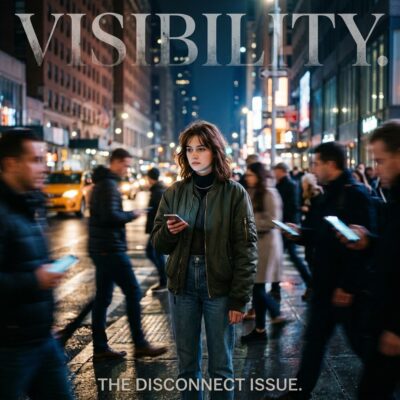
The fear of being truly seen sits quietly beneath many modern behaviors. People often crave attention, validation, and recognition, yet feel deeply uncomfortable when someone genuinely understands who they are beneath the performance.
It happens everywhere now. Online, people share curated fragments of themselves daily. Offline, many still struggle to express what they actually feel. There is visibility everywhere, but emotional exposure remains terrifying.
This contradiction says something important about modern identity. Most people do not simply want attention. They want acceptance without judgment. They want closeness without rejection. They want to feel visible while still remaining emotionally protected.
That emotional tension shapes far more of human behavior than most realize.
Why the Fear of Being Truly Seen Feels So Personal
Being truly seen is emotionally risky because it removes control.
Attention can be managed. People can carefully shape what others notice:
- achievements
- humour
- appearance
- intelligence
- confidence
Real emotional visibility works differently. It exposes uncertainty, insecurity, loneliness, and contradiction.
That level of openness can feel psychologically dangerous, especially in a culture where identity is constantly observed and evaluated.
Fear of Being Truly Seen and Emotional Vulnerability
Vulnerability sounds beautiful in theory. In reality, it often feels uncomfortable.
When someone sees beyond the polished version of us, they also see the parts we spend energy hiding:
- fear of failure
- emotional dependence
- insecurity
- shame
- unmet needs
For many people, attention feels safer than intimacy because attention does not always require emotional honesty.
A viral post can feel easier than a difficult conversation.
Why Validation Often Feels Temporary
External validation creates emotional relief, but usually only for a short time.
Compliments, likes, praise, or recognition may temporarily quiet insecurity. However, if someone still feels emotionally unseen underneath, the reassurance fades quickly.
That is why many people continue chasing visibility while still feeling disconnected internally.
The emotional need was never only attention. It was understanding.
How Modern Culture Intensified the Fear of Being Truly Seen
Digital culture changed how people present themselves.
Today, identity is often shaped publicly. People build versions of themselves online through aesthetics, opinions, productivity, humor, and carefully selected moments.
Over time, this creates pressure to remain emotionally consistent even when real human emotions are naturally inconsistent.
Fear of Being Truly Seen in the Age of Social Media
Social media rewards performance.
People quickly learn what gains approval and what creates discomfort. As a result, many begin editing themselves unconsciously.
Certain emotions become easier to share:
- ambition
- confidence
- success
- humor
Others stay hidden:
- jealousy
- confusion
- loneliness
- emotional need
The result is a strange emotional imbalance where people are highly visible but selectively known.
Real-Life Observation: The “I’m Fine” Culture
One of the most common modern phrases is:
“I’m fine.”
People say it at work, in friendships, and even in relationships where emotional honesty should feel safe.
Often, it is not dishonesty. It is emotional self-protection.
Many individuals fear that if they express what they truly feel, they may appear weak, dramatic, needy, or difficult.
So they stay emotionally edited.
Why Attention Feels Safer Than Authentic Connection
Attention creates distance. Genuine connection removes it.
That difference matters psychologically.
When people seek attention, they often maintain control over how much of themselves others can access. Authentic connection, however, requires unpredictability.
Someone may truly understand you.
Or reject you.
That emotional uncertainty is uncomfortable for almost everyone.
Fear of Being Truly Seen and Emotional Rejection
At the centre of this fear is rejection.
Not surface-level rejection, but emotional rejection — the feeling that someone fully understood who you are and decided it was not enough.
This fear influences:
- dating behaviour
- friendships
- creative expression
- leadership
- online identity
It even affects career culture. Many professionals confidently present expertise online while privately struggling with imposter syndrome and emotional exhaustion.
People often protect themselves by staying impressive instead of emotionally transparent.
Why Some Conversations Feel Emotionally Rare
Occasionally, someone asks a question that bypasses surface-level interaction completely.
“How are you really doing?”
Moments like that feel emotionally powerful because genuine attention has become rare. Most communication today moves quickly. Emotional depth requires slowing down enough to notice what is beneath the performance.
The Psychology Behind Emotional Masking
Emotional masking is not always intentional.
Most people learn it gradually through social experiences, rejection, criticism, family dynamics, or cultural expectations.
Eventually, certain emotional traits begin feeling unsafe to reveal openly.
Fear of Being Truly Seen and Childhood Conditioning
For many people, emotional self-protection begins early.
Children who feel judged, dismissed, or misunderstood often learn to manage how they appear emotionally. Some become overly agreeable. Others become hyper-independent or excessively humorous.
These patterns often continue into adulthood unnoticed.
A person may become highly socially skilled while still feeling emotionally unseen internally.
Real-Life Example: The High-Functioning Persona
Modern culture admires people who appear composed constantly.
The productive employee.
The confident creator.
The emotionally “low maintenance” friend.
Yet behind many highly functional personas is someone quietly exhausted from maintaining emotional control all the time.
This is why emotionally safe relationships feel so transformative. They allow people to stop performing temporarily.
Why the Fear of Being Truly Seen Is Growing Today
Modern life increased exposure while reducing emotional safety.
People are observed constantly now:
- online profiles
- workplace branding
- public opinions
- social performance
- digital footprints
At the same time, internet culture can feel highly judgmental and reactive.
Naturally, many people become emotionally cautious.
Fear of Being Truly Seen and Online Identity
The internet rewards polished identity.
People rarely post moments where they feel emotionally lost, insecure, or deeply uncertain unless those emotions are packaged into something aesthetically acceptable.
Even vulnerability sometimes becomes curated.
This creates a strange emotional paradox:
people are sharing more while revealing less.
Real-World Observation: Why Voice Notes Feel More Honest
Interestingly, many people now prefer voice notes over text messages.
Hearing pauses, tone changes, laughter, or emotional hesitation creates something written communication often lacks: emotional texture.
It feels more human.
That small shift reveals an important truth:
people still crave emotional closeness beneath digital culture.
What Being Truly Seen Actually Requires
Being truly seen is not about oversharing everything.
It is about experiencing emotional honesty without fear of performance.
That usually happens in smaller, quieter moments:
- conversations without distraction
- friendships without image management
- relationships where uncertainty feels safe
- spaces where people can admit confusion without losing dignity
Fear of Being Truly Seen and the Need for Emotional Safety
People open emotionally when they feel psychologically safe.
Not judged.
Not analysed.
Not immediately corrected.
Just understood.
This is why emotionally intelligent people often leave lasting impact. They create environments where others feel less pressure to perform identity constantly.
Why Authenticity Feels So Rare Today
Authenticity is difficult because it cannot be perfectly controlled.
Real humans are contradictory sometimes.
Confident and insecure.
Strong and emotionally overwhelmed.
Social and lonely.
Yet modern culture often pressures people into simplified versions of themselves.
That is why genuine emotional honesty feels refreshing now. It interrupts performance culture.
How to Build More Genuine Human Connection
The solution is not abandoning visibility entirely. The internet still creates creativity, belonging, and opportunity.
The real shift is learning to separate attention from emotional worth.
Some practical ways people rebuild authentic connection include:
- having slower conversations
- reducing performative posting
- practicing emotional honesty gradually
- spending time offline intentionally
- allowing imperfection in relationships
Fear of Being Truly Seen and Emotional Courage
Being emotionally seen requires courage because there are no guarantees attached to vulnerability.
However, meaningful relationships rarely grow through perfection. They grow through honesty, trust, and emotional consistency over time.
Attention may attract people.
Authenticity is usually what allows connection to stay.
Conclusion
The modern world made visibility easier than ever before. Yet beneath constant interaction, many people still quietly struggle with the fear of being truly seen.
Not because they dislike connection, but because emotional exposure feels risky.
People crave attention partly because it offers recognition without full vulnerability. However, recognition alone rarely satisfies deeper emotional needs.
Real connection begins when performance softens.
When conversations slow down.
When people stop managing every emotional detail and allow themselves to exist more honestly.
Perhaps that is why emotionally genuine moments feel unforgettable today. In a world built around visibility, authenticity feels rare enough to matter deeply.
If this article resonated with you, share it with someone who knows the version of you that exists beyond appearances.
1 Comment
Ambition Changes Personality Over Time May 18, 2026
[…] emotional layer changes behaviour […]