
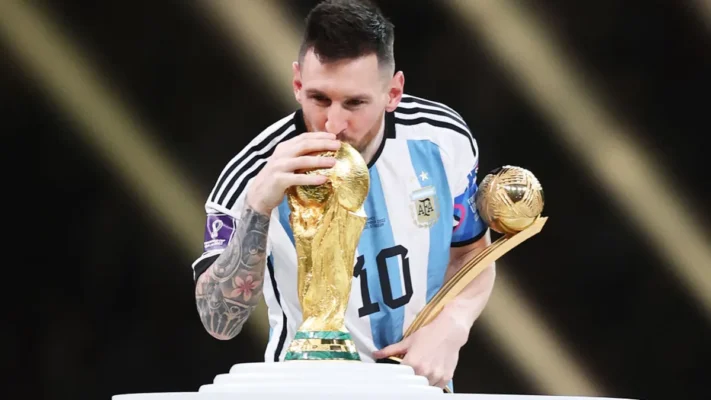
The phrase Lionel Messi leadership style resonates far beyond football conversations. In an era obsessed with loud confidence, personal branding, and constant visibility, Lionel Messi became one of the most influential leaders in modern sports by doing almost the opposite.
Modern sports culture rewards visibility. Athletes today are expected to become brands, personalities, content creators, and constant entertainers. Platforms like Instagram and TikTok have changed public expectations. Fans no longer only watch performances; they expect access to emotions, opinions, routines, and reactions.
Messi never fully played that game.
And strangely, that restraint made him even more influential.
While many public figures build authority through volume, Messi built trust through consistency. People watched him return every season with the same focus, the same discipline, and the same refusal to make himself bigger than the game.
That created a rare kind of credibility.
Not the credibility of charisma — but the credibility of reliability.
He rarely delivers dramatic speeches. He does not dominate headlines with emotional outbursts. Even his celebrations often feel restrained compared to the spectacle around him. Yet millions of people, especially young athletes, students, and professionals, see something deeply reassuring in the way he carries pressure.
That is what makes Messi culturally important beyond trophies.
For an entire generation raised in the noise of social media performance, his presence quietly changed how leadership itself is understood.
The Generation That Grew Up Watching Him
For millions who grew up during the late 2000s and 2010s, Messi became emotionally tied to important personal memories.
Students watched him after difficult school days. Young professionals stayed awake late during Champions League nights while struggling through uncertain careers. Many people saw parts of themselves in someone who looked naturally introverted inside a world that rewarded louder personalities.
That connection cannot be explained only through statistics.
It felt personal.
How Lionel Messi Leadership Style Redefined Strength
One of the biggest shifts Messi created was changing how people define strength itself.
For decades, sports leadership was often associated with dominance, aggression, and vocal authority. Captains were expected to command rooms.
Messi introduced another possibility.
He showed that calmness can also influence people deeply.
Leadership Without Performance
There is an important difference between leadership and performance.
Many leaders perform confidence publicly while privately struggling to maintain stability. Messi’s influence feels different because it rarely appears manufactured.
Even during high-pressure moments especially with Argentina national football team he often looked emotionally vulnerable rather than theatrically heroic.
Ironically, that vulnerability strengthened public trust.
People saw a human being carrying enormous expectations instead of a flawless machine pretending pressure does not exist.
The World Cup Changed His Emotional Legacy
The 2022 FIFA World Cup transformed Messi’s public image in a profound way.
Before that victory, conversations about him often revolved around comparisons, criticism, or legacy debates. After the World Cup, something shifted emotionally.
People stopped only discussing greatness.
They started discussing endurance.
Watching him finally lift the trophy after years of national disappointment felt meaningful even to audiences outside football. It resembled the emotional release many people experience after surviving long periods of doubt in their own lives.
That is why the celebration became globally emotional.
Not because he won.
Because he kept going.
Why Lionel Messi Leadership Style Connects With Quiet Personalities
One reason Messi’s influence feels unusually personal is because many introverted people rarely see themselves represented as leaders.
Modern culture often rewards the loudest communicator in the room. Schools, workplaces, and even social media algorithms tend to favor visible confidence.
Messi quietly challenged that assumption.
Quiet Consistency Is Still Leadership
There is a subtle but powerful lesson in the way Messi leads teams.
He rarely tries to dominate attention emotionally. Instead, teammates consistently describe his influence through behavior: arriving focused, training relentlessly, remaining composed under pressure, and performing when the team needs stability most.
That kind of leadership is less cinematic.
But in real life, it is often more sustainable.
Students preparing for difficult exams understand this feeling. So do creators building audiences slowly without viral shortcuts. So do professionals carrying responsibilities silently while others receive more attention.
Messi’s career validates a truth many people needed to hear:
You do not need to become louder to become influential.
A Different Kind of Masculinity
There is another cultural layer beneath Messi’s popularity.
For years, public masculinity in sports emphasized dominance and emotional hardness. Messi’s personality introduced a softer version of strength, disciplined, emotionally restrained, deeply committed, yet visibly human.
That matters more than many people realize.
Especially for younger audiences trying to understand ambition without losing emotional balance.
The Emotional Intelligence Behind Lionel Messi Leadership Style
Leadership today increasingly depends on emotional intelligence rather than authority alone.
Messi’s career reflects that shift remarkably well.
He Rarely Makes Himself the Story
One of the most unusual aspects of Messi’s career is how rarely he centers himself emotionally in public moments.
Even after historic achievements with FC Barcelona or Argentina, his reactions often focus on teammates, family, or collective effort.
In a digital culture shaped by self-promotion, that humility feels almost disruptive.
It also explains why audiences trust him.
People naturally become skeptical when influence appears too carefully engineered. Messi’s image feels believable because it has never looked excessively optimized.
The Power of Emotional Restraint
There is a reason emotionally restrained people sometimes create stronger long-term influence.
When someone speaks constantly, audiences stop listening carefully. But when someone remains quiet most of the time, their actions gain emotional weight.
Messi’s silence often amplified his presence rather than weakened it.
That is leadership many industries outside sports are slowly rediscovering as well.
According to Harvard Business Review, modern leadership increasingly values empathy, emotional stability, and trust-building over aggressive authority models.
Messi unintentionally became a cultural example of that transition.
Modern Digital Culture Made Messi Even More Relatable
Ironically, social media may have strengthened Messi’s emotional connection with audiences rather than diluted it.
Why?
Because constant online performance exhausted people.
Many creators today feel pressure to appear productive, confident, entertaining, and emotionally available all the time. That pressure affects entrepreneurs, freelancers, influencers, and even students.
Messi represents the opposite energy.
He reminds people that identity does not always need constant broadcasting.
Real-World Observation: Why People Share Messi Clips
Look at modern internet behavior for a moment.
People rarely only share Messi highlights because of technical brilliance. Often, viral clips involve small emotional moments — comforting teammates, hugging family members, quietly reacting after victories, or showing visible relief after difficult matches.
Audiences are responding to emotional authenticity as much as sporting excellence.
That is an important cultural shift.
What Young Professionals Can Learn From Messi’s Influence
The deeper lesson behind Messi’s career is not really about football.
It is about sustainable excellence.
Consistency Ages Better Than Hype
Many careers today are built around short-term attention. Viral visibility often matters more than long-term trust.
Messi’s journey shows the opposite strategy.
He built one of the most respected careers in sports history through repetition, patience, emotional discipline, and gradual mastery.
That approach applies far beyond athletics.
Creators building meaningful audiences, professionals developing expertise, and entrepreneurs growing businesses slowly often experience similar emotional journeys.
Quiet progress rarely looks impressive daily.
But over years, it becomes undeniable.
Leadership Is Often Emotional Safety
One overlooked truth about leadership is this:
People trust individuals who make pressure feel calmer.
Messi consistently gave teammates emotional stability during chaos. Even when matches became emotionally intense, his presence often reduced panic rather than increased it.
That quality exists in great managers, founders, teachers, and mentors too.
Leadership is not always about commanding energy.
Sometimes it is about regulating it.
Why His Legacy Feels Bigger Than Football
Most legendary athletes are remembered for achievements.
Messi will also be remembered for emotional atmosphere.
He made humility feel powerful in a time obsessed with visibility. He made quiet personalities feel seen in leadership conversations. And he reminded millions that greatness does not always need dramatic performance to become unforgettable.
That may ultimately become his most lasting cultural contribution.
Not the goals.
Not the trophies.
But the permission he gave people to believe that calmness, discipline, and emotional authenticity still matter in modern success.
And perhaps that is why his story continues to feel deeply personal to so many people around the world.
Conclusion
The impact of Lionel Messi goes far beyond football statistics or sporting debates. His journey reshaped how many people think about leadership, humility, resilience, and emotional influence.
For students, creators, professionals, and athletes alike, his career offers a rare reminder: greatness does not always arrive loudly.
Sometimes it arrives quietly, consistently, and with extraordinary emotional depth.
If this perspective resonated with you, explore more articles about identity, ambition, emotional resilience, and modern leadership culture on our blog.