
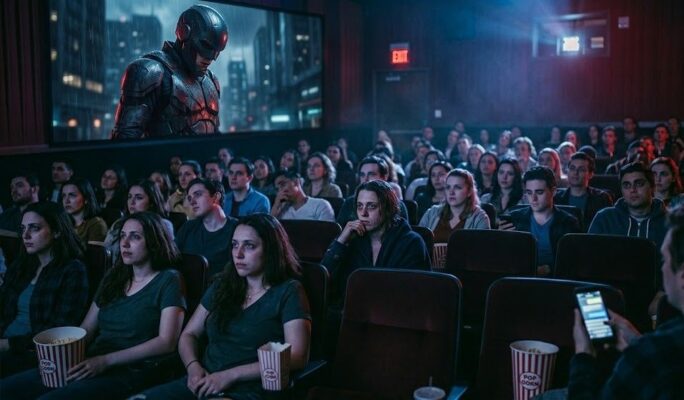
Superhero fatigue is no longer just an internet debate. It has become a real cultural feeling that audiences notice the moment another polished trailer drops with identical stakes, familiar jokes, and another sky-sized battle.
For more than a decade, studios like Marvel Studios and DC Studios dominated global entertainment. These films once felt massive, communal, and emotionally exciting. Yet somewhere between endless multiverse storylines and nonstop franchise expansion, many viewers quietly stopped feeling surprised.
That shift matters because audiences are not rejecting superheroes themselves. Instead, they are rejecting predictability.
When Every Movie Starts Feeling Algorithmic
The biggest issue with modern franchise filmmaking is not quality alone. It is familiarity.
Many recent blockbusters feel designed by audience data instead of creative instinct. The emotional rhythm is often identical: dramatic opening, quick sarcasm, CGI escalation, emotional call back, sequel tease. Eventually, viewers begin recognizing the structure before the story even unfolds.
That predictability changes how people emotionally engage with movies. Instead of anticipation, audiences enter theaters expecting efficiency.
Interestingly, streaming culture accelerated this problem. Platforms trained viewers to consume content rapidly, while studios responded by producing cinematic universes at an exhausting pace. As a result, superhero storytelling stopped feeling like an event and started resembling homework.
The Best Superhero Films Felt Personal
Some of the most successful comic-book films worked because they carried strong creative identity.
Why “The Dark Knight” Still Feels Different
The Dark Knight never relied purely on spectacle. Christopher Nolan approached the story like a crime thriller, not a corporate franchise installment. Meanwhile, Heath Ledger delivered a performance that felt chaotic and deeply human.
Similarly, Logan worked because it embraced emotional exhaustion rather than hiding behind spectacle. The film understood aging, grief, and vulnerability in a way many superhero movies avoid.
Audiences still respond to those films because they feel authored instead of manufactured.
Spectacle Got Bigger While Emotional Stakes Got Smaller
Modern superhero films often look visually larger than ever. However, emotionally, many feel strangely weightless.
World-ending stakes no longer impress audiences when every movie threatens the universe. Eventually, destruction loses emotional meaning. People stop caring because consequences rarely feel permanent.
That is partly why smaller-scale projects suddenly resonate more deeply. Viewers increasingly connect with grounded tension, flawed characters, and emotional realism over nonstop visual escalation.
Even younger audiences, especially on platforms like TikTok and YouTube, openly discuss wanting stories that feel messier and more human. Perfect heroes no longer reflect modern emotional reality.
Audiences Now Crave Risk Instead of Perfection
One fascinating cultural shift is happening right now: audiences reward creative risks more than polished formulas.
The Rise of Imperfect Blockbusters
Films like The Batman or Spider-Man: Into the Spider-Verse succeeded partly because they felt stylistically distinct. They carried mood, texture, and personality.
Meanwhile, many highly engineered franchise entries disappear from public conversation within weeks.
That says something important about modern entertainment culture. People no longer remember movies simply because they were successful. They remember films that create emotional atmosphere.
In many ways, superhero fatigue is really emotional fatigue. Audiences are tired of stories that never slow down long enough to feel sincere.

Social Media Changed How Fans Experience Movies
Fandom itself looks different now.
During the early phases of the Marvel Cinematic Universe, audiences gathered around shared excitement. Today, online conversation moves much faster. Clips become memes within hours. Reactions become content. Entire movies are judged through screenshots before release weekend even arrives.
Consequently, studios feel pressured to constantly chase viral moments instead of long-term storytelling depth.
Ironically, this endless online cycle makes films feel disposable. A movie can dominate timelines for three days and disappear emotionally by the following week.
That is a major reason modern audiences increasingly revisit older films that feel slower, riskier, or more emotionally grounded.
The Future of Superhero Stories Depends on Creative Courage
Superhero movies are not disappearing anytime soon. The genre is too culturally powerful, globally recognizable, and commercially valuable.
However, audiences are demanding evolution.
They want filmmakers willing to prioritize tone, perspective, and emotional honesty over cinematic sameness. They want stories that trust silence, vulnerability, and unpredictability again.
More importantly, viewers want characters who feel human before they feel iconic.
That may be the real lesson behind superhero fatigue. Spectacle alone no longer creates cultural connection. Personality does.
Conclusion
Superhero movies once felt like the future of blockbuster storytelling. Now, audiences are asking something more difficult from Hollywood: authenticity.
The next era of comic-book cinema will probably belong to creators who are brave enough to break the formula instead of perfecting it. Because at this point, viewers are not searching for bigger explosions. They are searching for stories that actually stay with them after the credits end.
And honestly, that might be healthier for modern cinema.