

The new era of cricket is built for attention spans shaped by scrolling, short-form content, and instant emotion. Today’s audiences don’t just watch matches anymore — they consume moments, reactions, clips, edits, and narratives that travel faster than the sport itself.
A generation ago, cricket asked for patience. Modern cricket asks for attention.
That shift explains why formats like T20 dominate conversations, why players trend on Instagram before post-match interviews end, and why stadium atmospheres now feel closer to live entertainment events than traditional sporting afternoons. Cricket hasn’t lost its soul. It has simply adapted to the way people experience media now.
Why The New Era of Cricket Is Built for Attention Spans
Modern audiences live inside constant stimulation. Notifications interrupt conversations, streaming platforms compete for seconds of focus, and algorithms reward whatever grabs attention immediately.
Cricket understood that change faster than many expected.
T20 cricket, especially leagues like the Indian Premier League, transformed the game into something emotionally faster and visually louder. Matches became shorter, celebrations became bigger, and every over started carrying social media potential.
That wasn’t accidental. It reflected how younger audiences consume entertainment everywhere else.

The New Era of Cricket Is Built for Attention Spans on Social Media
Cricket now exists far beyond television broadcasts.
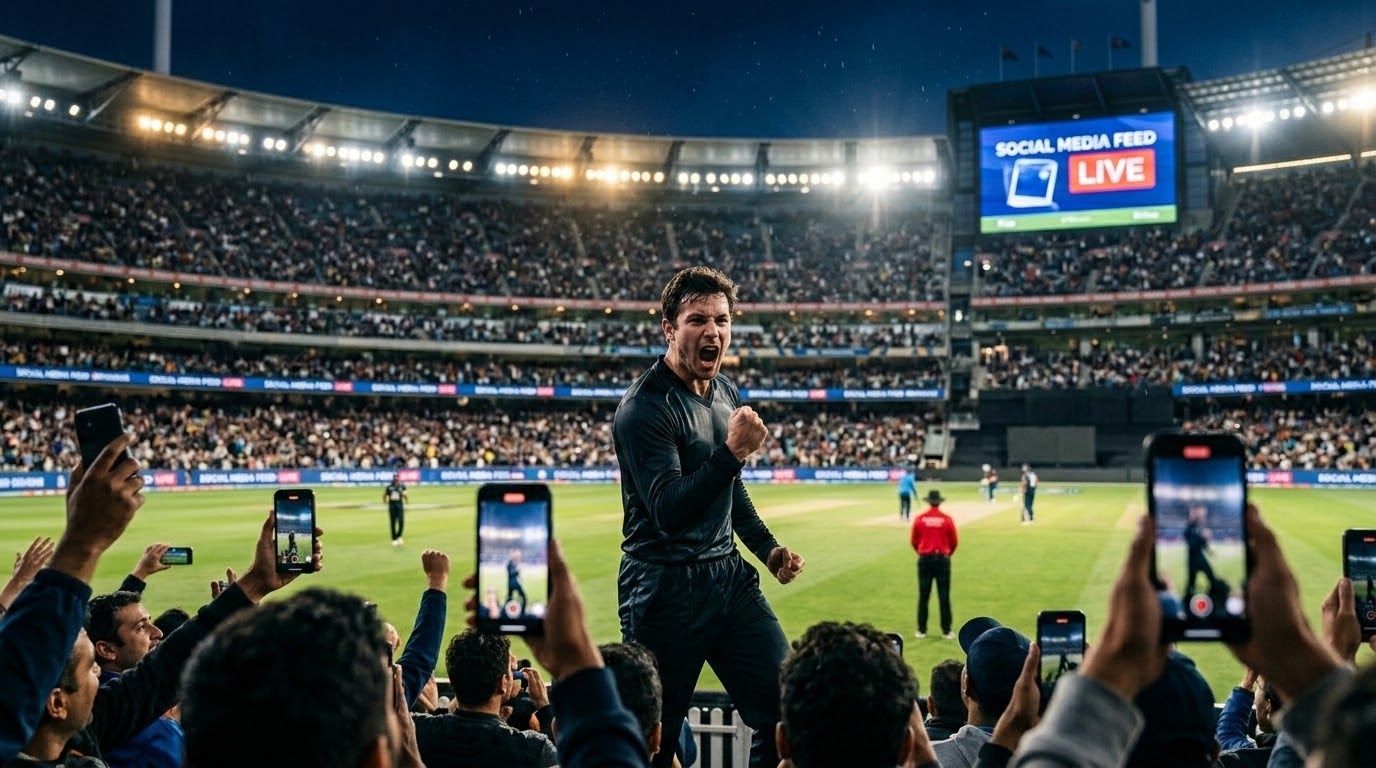
A single six from Virat Kohli becomes an Instagram Reel within seconds. Emotional reactions circulate on TikTok-style platforms before highlights packages even finish editing. Meanwhile, fan culture increasingly lives online through memes, fantasy leagues, edits, podcasts, and creator-driven commentary.
Attention Economies Changed Sports Culture
Platforms like YouTube and Instagram trained audiences to expect immediate emotional payoff.
Consequently, sports adapted.
That’s one reason cricket broadcasts now include ultra-fast replay edits, dramatic camera cuts, mic’d-up interactions, and cinematic storytelling around players. The sport competes not only with football or basketball anymore. It competes with streaming platforms, creators, and every other form of entertainment fighting for attention.
Why Test Cricket Still Matters Emotionally
Interestingly, the rise of fast-format cricket made many fans appreciate Test cricket even more.
In a culture obsessed with speed, slow experiences suddenly feel meaningful again.
Test cricket demands patience, emotional investment, and concentration. For some audiences, that feels refreshing precisely because modern life rarely slows down anymore.
The New Era of Cricket Is Built for Attention Spans — But Not Only Short Ones
One of the biggest misconceptions about modern cricket is that audiences only want shorter content. In reality, people still engage deeply when emotional stakes feel authentic.
That’s why documentaries like The Test connected with viewers globally. Fans weren’t only watching cricket. They were watching pressure, leadership, vulnerability, and identity.
The emotional layer keeps audiences invested longer than match duration alone ever could.
Cricket Players Are Becoming Cultural Personalities
Earlier generations mostly knew cricketers through interviews and newspaper coverage. Now audiences follow athletes daily through stories, podcasts, livestreams, and behind-the-scenes content.
That changes how fans connect emotionally.
Someone like MS Dhoni carries a calm, almost mythic presence online despite speaking relatively little. Meanwhile, younger players build audiences through humor, fashion, gaming culture, and personality-driven content.
Modern sports fandom increasingly revolves around relatability.
Fans no longer follow athletes only for statistics. They follow people whose personalities feel emotionally recognizable.
The New Era of Cricket Is Built for Attention Spans and Visual Storytelling
Modern cricket understands visuals better than ever.
Franchise branding, cinematic promos, dramatic stadium lighting, and emotionally charged anthem videos all contribute to the experience. Even match thumbnails on streaming apps now resemble movie posters.
That evolution mirrors entertainment culture more broadly.
Cricket Feels Closer to Streaming Entertainment Now
Sports leagues learned from platforms like Netflix that storytelling keeps audiences emotionally attached between events.
As a result, cricket increasingly sells atmosphere alongside competition.
Fans remember entrances, crowd chants, slow-motion celebrations, and emotional player reactions almost as vividly as scorecards. Sometimes they remember them more.
One subtle truth about modern sports culture is this: people replay feelings before they replay statistics.
Attention Spans Are Changing How Future Athletes Will Be Remembered
Legacy in sports used to depend mostly on records. Now it also depends on visibility, personality, and cultural presence.
A young player today doesn’t only compete for trophies. They compete for emotional relevance in an endless content cycle.
That creates pressure, but it also changes opportunity.
A brilliant performance can now become global within minutes. At the same time, audiences expect athletes to remain constantly visible online. Silence feels unusual in today’s sports ecosystem.
Still, the players who endure emotionally are usually the ones who make people feel something beyond performance.
Conclusion
The new era of cricket is built for attention spans shaped by digital life, but that doesn’t make the sport less meaningful. If anything, it reveals how deeply sports and culture now overlap.
Modern cricket understands emotion, pace, visuals, and storytelling in ways older formats never needed to. Yet beneath the reels, edits, and viral moments, the core appeal remains surprisingly human.
People still watch cricket for tension, identity, memory, and connection.
Only now, those emotions travel at internet speed.
If you enjoy culture-focused sports storytelling like this, explore more articles on modern fandom, digital-era athletes, and how entertainment is reshaping global sports culture.