
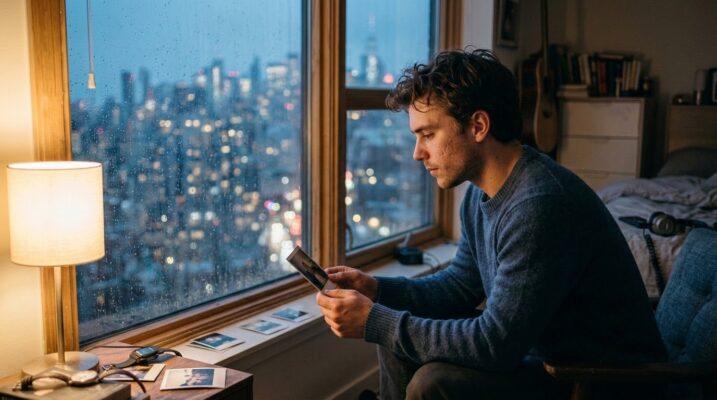
Night nostalgia psychology explains something many people quietly experience but rarely talk about openly. During the day, life moves fast enough to distract us. But at night, especially after the noise fades, old memories suddenly feel louder, more emotional, and strangely alive.
A song you forgot years ago feels personal again. An old conversation replays in your head. A photo becomes heavier than it should.
It’s not random.
There’s a psychological reason nighttime often turns people into emotional historians of their own lives.

Why Night Nostalgia Psychology Feels Stronger in Silence
Daytime keeps the brain occupied.
Notifications, conversations, work, traffic, deadlines — modern life constantly competes for emotional attention. But nighttime removes many of those distractions. Silence creates space for unfinished emotions to surface.
That’s why memories often arrive unexpectedly before sleep.
Not because people suddenly become “dramatic,” but because the brain finally has room to process emotional residue it ignored all day.
Interestingly, many emotionally reflective films from A24 or late-night scenes in movies like Before Sunset capture this exact emotional stillness. The absence of noise makes feelings impossible to avoid.
Why the Brain Revisits Emotional Memories at Night
The brain naturally becomes more reflective when external stimulation decreases.
Psychologists often connect nighttime emotional intensity with:
- reduced distractions
- emotional fatigue
- increased self-awareness
- loneliness triggers
- unresolved emotional processing
That combination creates the perfect environment for nostalgia.
How Night Nostalgia Psychology Connects to Loneliness
Not every nostalgic feeling is sadness.
But nostalgia becomes heavier when combined with emotional isolation.
Late at night, people often miss versions of themselves as much as they miss other people. Old friendships, school years, family dinners, childhood routines — they represent emotional safety as much as memory.
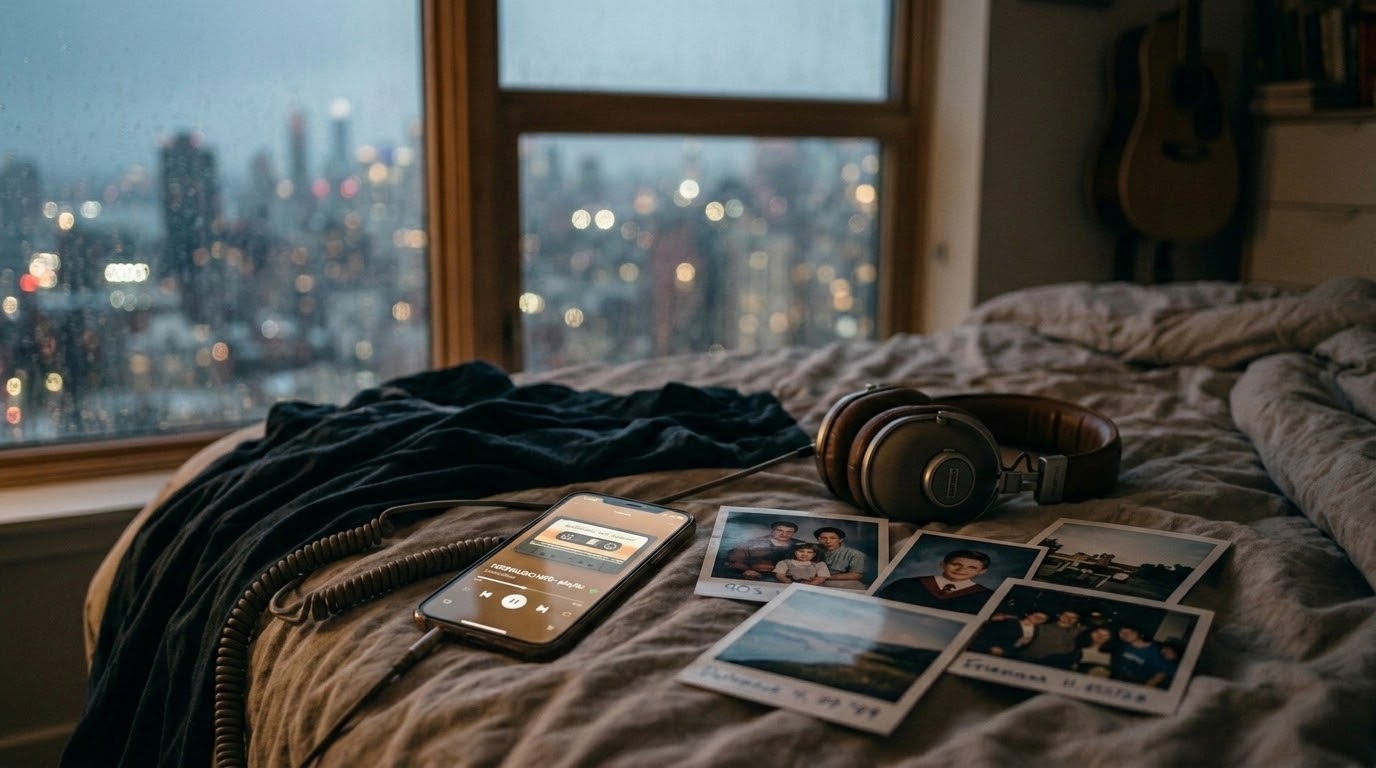
That’s why scrolling through old photos on Instagram at 1 AM feels very different from looking at them during lunch break.
At night, memories stop feeling informational.
They start feeling emotional.
The Internet Quietly Intensifies Nighttime Reflection
Modern digital behavior contributes to this too.
Algorithms constantly resurface:
- old memories
- archived photos
- past conversations
- “On this day” reminders
- nostalgic playlists
Platforms like Spotify understand something emotionally important: people often seek familiar feelings late at night, not just entertainment.
That’s partly why nostalgic music streams spike during evening hours.
Why Night Nostalgia Psychology Often Feels Cinematic
There’s something visually emotional about nighttime itself.
Dim lighting. Quiet streets. Headphones during long drives. Rain against windows. Empty rooms after everyone sleeps.
The environment naturally slows emotional perception.
One subtle truth people rarely mention: nostalgia often feels less painful during busy afternoons because sunlight psychologically grounds people in the present. Darkness, meanwhile, creates emotional openness.
That’s why nighttime memories often feel cinematic rather than logical.
Why Certain Songs Feel More Emotional After Midnight
Music interacts differently with emotional memory at night.
Without daytime distractions, lyrics become more personal. Instrumentals feel more immersive. Even silence between songs feels heavier.
Artists like Frank Ocean or Lana Del Rey built entire emotional aesthetics around this night time vulnerability.
Their music doesn’t simply sound nostalgic.
It feels emotionally spacious.
The Emotional Comfort Hidden Inside Night Nostalgia Psychology
Oddly enough, nostalgia is not entirely negative.
Research from Psychology Today often highlights how nostalgia can provide emotional continuity. It reminds people that their life contains meaningful experiences, relationships, and emotional depth.
Sometimes missing the past is also proof that something genuinely mattered.
That perspective changes the feeling slightly.
Instead of viewing nostalgia as emotional weakness, it becomes evidence of emotional connection.
Why People Romanticize the Past at Night
The brain edits memories emotionally.
At night, people rarely replay ordinary moments. They replay emotionally charged fragments:
- laughter during late-night calls
- old summer evenings
- childhood routines
- first heartbreaks
- moments that once felt safe
Memory is rarely objective.
It’s emotional storytelling.
And nighttime amplifies storytelling instincts.
What Night Nostalgia Psychology Reveals About Modern Life
Modern life leaves very little room for emotional processing.
People spend entire days consuming information without emotionally absorbing experiences. Night becomes one of the few remaining spaces where reflection naturally happens.
That may explain why younger adults increasingly relate to:
- nostalgic playlists
- emotionally reflective cinema
- late-night journaling
- comfort shows
- quiet solo routines
In some ways, nostalgia is becoming a coping mechanism for overstimulation.
One original observation worth considering: people don’t always miss the past itself. Sometimes they miss who they were emotionally during that period.
That distinction matters.
How to Handle Intense Nighttime Nostalgia in Healthier Ways
You don’t need to “fix” nostalgia completely.
But you can hold it differently.
Small Ways to Process Nighttime Emotions Better
- journal thoughts instead of spiraling mentally
- listen intentionally instead of endlessly doom-scrolling
- avoid romanticizing painful relationships too heavily
- recognize emotional triggers without judging yourself
- create present-day memories worth emotionally revisiting later
The goal isn’t to stop feeling nostalgic.
The goal is preventing nostalgia from trapping you emotionally in places life has already moved beyond.
Conclusion
Night nostalgia psychology feels powerful because night time removes the emotional noise people use to distract themselves during the day. In that silence, old memories return with surprising clarity.
And honestly, that experience is deeply human.
Most people are not simply missing old moments at night. They are reconnecting with emotions, identities, and versions of themselves that once felt meaningful.
Maybe that’s why night time nostalgia feels so personal.
It reminds people that even forgotten moments still leave emotional fingerprints behind.
1 Comment
Why Conversations Stay in Our Mind for Years May 24, 2026
[…] the day, distraction protects people from emotional reflection. At night, the brain finally has space to revisit unresolved […]